
PUP-01CuepupAI scoringIn developmentRev 1.0
PUP-01 · AI scoringIn development
AI scoring drafts for an episode, from your own library.
Cuepup helps decide where music should start and stop, choose tracks from a project’s library and edit them to the scene. The composer reviews the draft and makes the final decisions.
Today: our production scoring workflow runs in a third-party audio workstation. Drafts are reviewed on a timeline at picture timecode; our own review editor, Cuepup Local, is in development and moving the full workflow into it is still in progress.
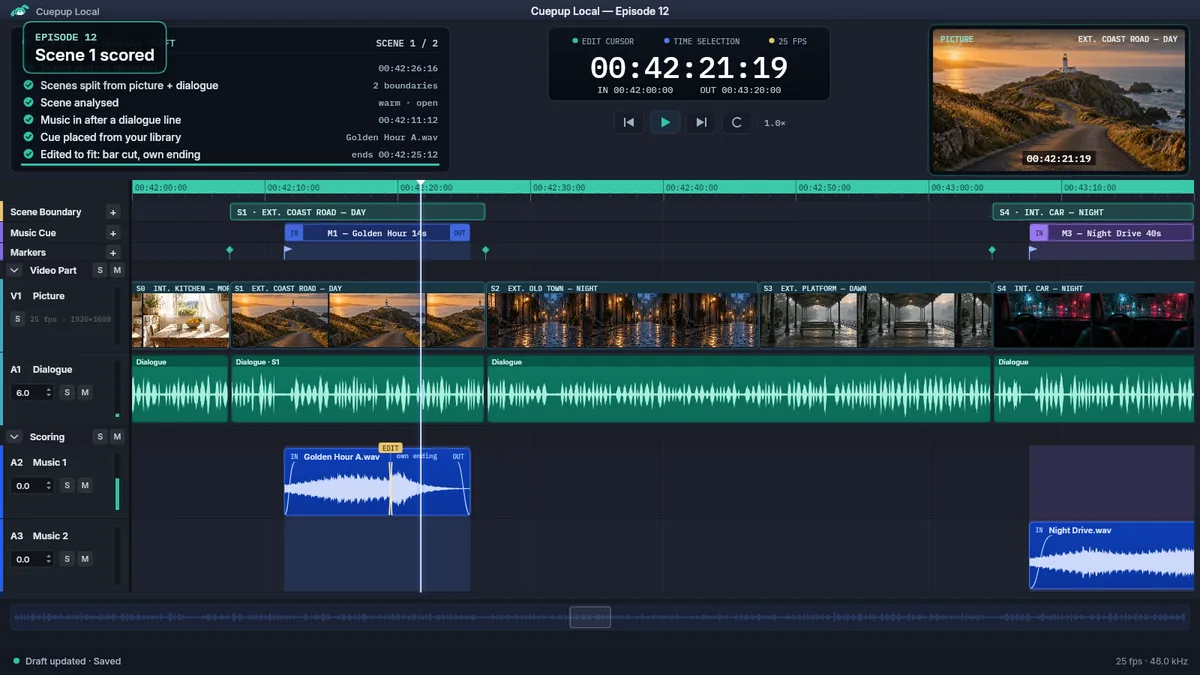
Pipeline
From the picture to a draft you can edit.
Claude-based scene analysis works alongside dedicated audio and editing tools. Together they prepare suggestions for the composer to review. These scoring steps currently run in a third-party audio workstation; we are bringing them into Cuepup Local.
- 01
Picture
Analyze picture cuts and dialogue to describe what is happening in the episode.
Scene analysis - 02
Scene book
Claude helps write and check scene descriptions, giving the scoring tools context for their suggestions.
Scene descriptions - 03
Spotting draft
Suggest where music could enter and leave, and the kind of music each scene may need, such as tension, comedy or a love theme.
Proposed music cues - 04
Track selection
Choose tracks from the project’s library, consider earlier uses and prepare edits that fit the scene. Choices and repeats remain open to review.
Family · energy - 05
Composer review
The composer reviews the prepared session, changes music and timing, and decides what goes into the final mix.
Composer review
Review and improveCompleted-episode reviews record which choices were kept, changed or removed. These records help guide later selections and development; they do not retrain the underlying model.
Spotting draft
Illustration of a spotting draft: picture cuts, scene changes, dialogue and music regions with their families, and the in and out of one cue.
How we check it
Compare the draft with the composer’s decisions.
We review song choices, music entrances and exits, and the edits needed to reach the final version. These are internal checks on our own work. They help us find what needs improvement.
What these internal checks tell us
We compare proposed tracks, music presence and cue boundaries with the composer’s final decisions. Timing, edits and levels can still change. These checks guide development; they do not establish external customer results or performance on new material.
Review & delivery
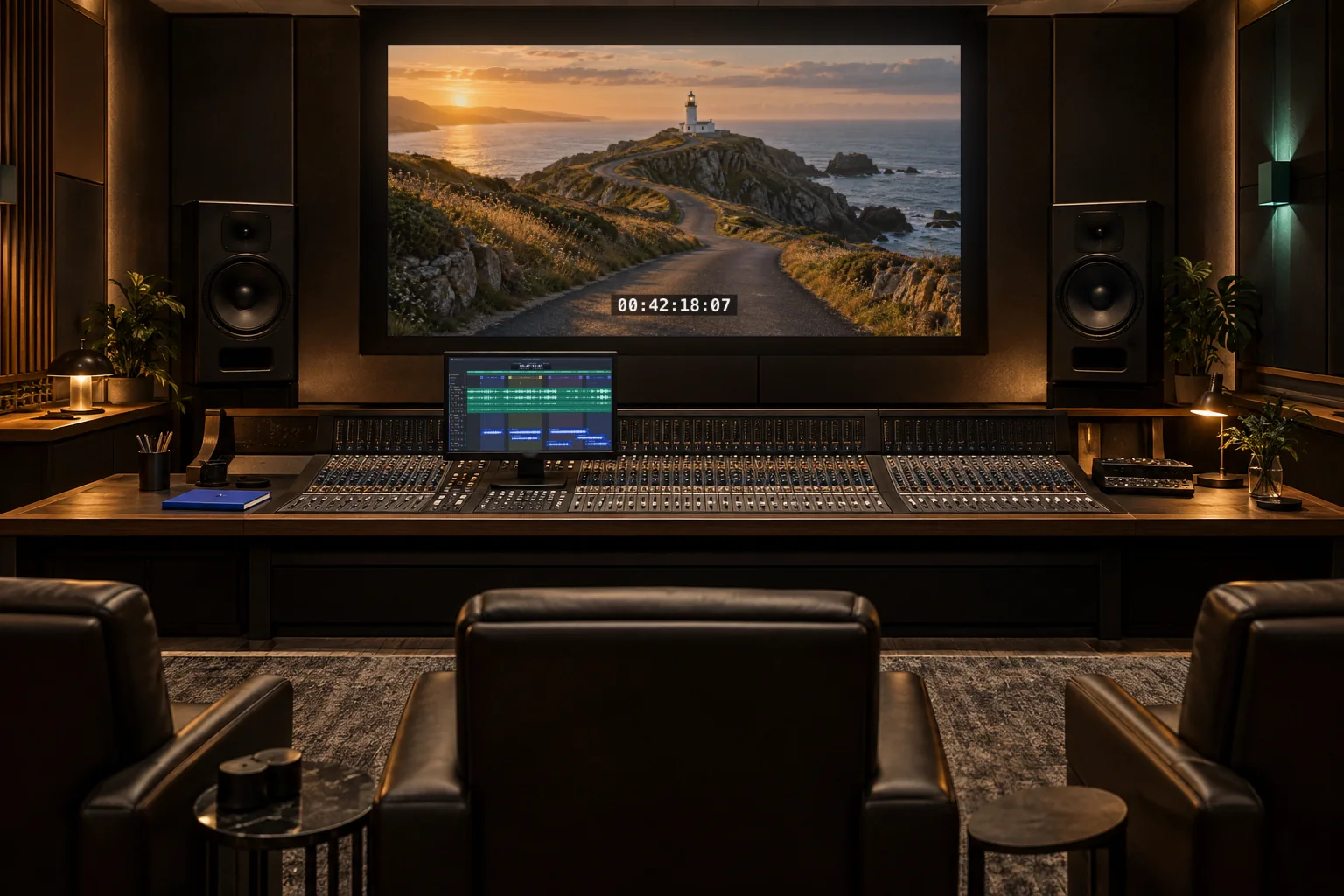
Every cue at picture timecode, ready to review.
The draft opens on a timeline with scene boundaries, cue regions, in and out points and the source of every track. The composer or music supervisor changes what they want and approves the final cues before delivery.
Project fit & availability
For teams preparing music for picture.
Our first focus is long-running TV drama. Broadcasters, production teams and post-production houses can discuss a scoped pilot for preparing and reviewing music drafts.
Can I use it today?
We currently use and test AI scoring in-house. There is no public sign-up. We agree each beta pilot’s scope before requesting project material.
Does Cuepup create new music?
The current workflow selects and edits recordings from a project-provided library. The composer makes the final choices, and the project team checks music permissions.
How are you improving the tools?
We compare proposed music with the composer’s final choices, examine errors and test editing workflows. Our development notes record progress and what remains in progress.
Explore an AI scoring pilot.
Tell us about your workflow. We agree the pilot scope before requesting project material.